
Many years ago, many Indian children grew up with the belief that if they worked hard in school and earned a university degree, they would always have a good job waiting for them once they graduated. This ideal is slowly falling apart as many of the youth who have done everything “correctly” are now reeling from the effects of the lack of job opportunities.
There is a continual rise in the number of educated people who are unable to find work because of the growing educated-unemployment crisis in India. It no longer matters if you hold multiple degrees, since many individuals with these credentials cannot even find jobs in their area of expertise. According to the ILO-IHD India Employment Report, 83% of the unemployed population in India, made up of young people, of which over 65% have either completed secondary education or have obtained a higher level of education. As stated by the report, as a result of these staggering statistics, the unemployment rate for graduates is over 29%, nearly nine times that of the illiterate population.
The Mercer | Mettl India Graduate Skill Index may help explain this phenomenon. In the year 2025, only 42.6% of all graduates reported to be employable; the percentage had barely improved over previous years. The annual rate of job preparedness in many of the most in-demand technical fields continues to decrease, and only 46% of graduates in 2025 were considered to be sufficiently prepared to take a job in artificial intelligence and machine learning. Furthermore, many of the non-technical positions, such as human resources and digital marketing, report similar employability rates of nearly 40%.
When degree do not offer sufficient security
According to the 2025 Blind Survey of Professionals in the Workplace, a professional community, anxiety levels among India’s educated workforce are increasing. There were 83% of the surveyed professionals with degrees who reported they were either looking for work in the previous year or knew someone else who was. The majority (70%+) of graduates were from Tier 1 and Tier 2 schools, dispelling the myth that getting a degree from a prestigious school guarantees job security.
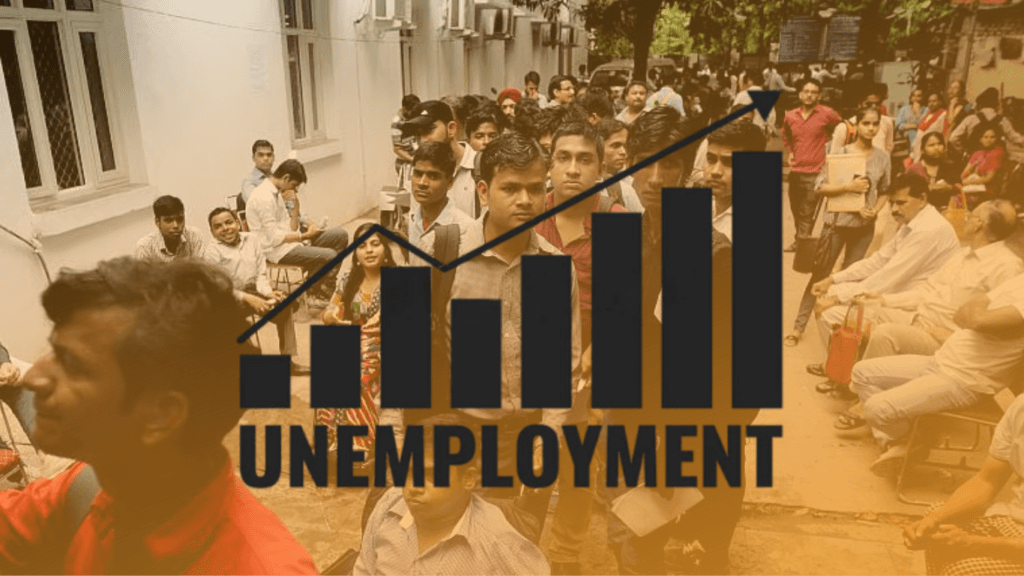
Confidence levels have dropped dramatically, with 63% percent of graduates feeling that they would have a hard time securing a new job, while only 5% felt confident in receiving a higher paycheck if they changed jobs. As a result, career stability is temporary and individuals will take more risks as they try to advance their careers.
Degree provide no skills or employability
The education system in India is the root cause of this problem. Institutions of higher education in India place more emphasis on rote memorisation than applied skill, more emphasis on outdated syllabi versus industry needs, and more emphasis on exam performance than problem-solving skills. This discrepancy is most notable in industries with fast growth such as Artificial Intelligence, Data Analytics, and Advanced Manufacturing.
It is also troubling to note that as evidenced by employability rates, there are no significant differences between the graduates of Tier 1, Tier 2, and Tier 3 institutions: therefore, this issue is a symptom of a defective system rather than one of individual colleges. All colleges in India produce graduates who are better at theory than in on-the-job skills.
Unemployment Growth and Weak Reform
The economic growth of India has not produced enough jobs to keep up with the number of people entering the labour force; 2011 to 2018 saw 9 million jobs lost in India; including 3.5 million from the manufacturing sector. Initiatives like ‘Make in India’ focused on capital-intensive industries limiting the ability to create large amounts of jobs.
The National Education Policy (NEP) 2020 supposed to change the way educators taught, but many critics believe that it is missing critical elements to enable implementation and significant involvement from industry. The multiple-entry exit system touted by the NEP has led to more graduates moving into areas like gig and e-commerce rather than skilled careers.
Other skill missions, including PMKVY, Skill India, and NAPS, continue to suffer from low placement results and poor monitoring. Only 2.7% of India’s current workforce has been vocationally trained; this is well below the global standard for vocational training.
The Recalibrating of a Generation
The most monumental shift from the current workforce to those coming into the workforce is psychological. The current professional class in India is reconsidering what it takes to succeed professionally. While having a degree, valued, it does not necessarily mean stability in employment. Flexibility, continuous learning, a large network, and transferable skills are now more valuable than just producing credentials.
There is a pressing need to close the gap between education and employment by realigning educational curricula to meet the needs of employers, providing greater access to vocational education programmes, reforming the academic workforce and providing transparent tracking of graduate employment outcomes. Failure to implement these changes will result in India’s demographic dividend becoming a demographic liability.
The message is that, when education does not prepare even those students who have graduated for the world of work, it is not an individual crisis, but a systemic crisis.