


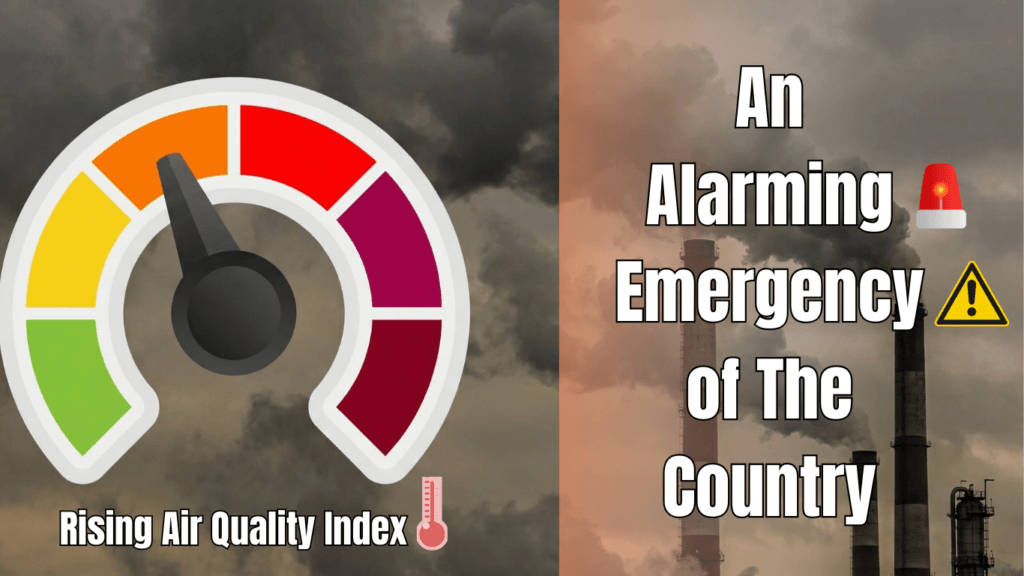
For years, air pollution in India has seen as a problem of megacities – Delhi, Gurugram, Ghaziabad, or Noida choking under toxic smog each winter. These cities top list of most polluted cities in the world, trigger emergency responses, and draw nationwide attention in many countries. But beside this specific problem lies an extremely worse reality: air pollution is quietly spreading to regions once considered environmentally secure. Assam, which was long viewed as a state protected by its hills, forests and distance from urban congestion, is now facing a slow but dangerous rise in air pollution levels.
Despite of its geography of being surrounded by hills, forests, and rivers, Assam is witnessing worsening AQI levels, due to increase in rapid anthropogenic activity such as deforestation, unchecked urban expansion, industrial emissions, and weak enforcement of environmental regulations are steadily eroding Assam’s natural shield. Guwahati and Byrnihat, Assam – Meghalaya border rankedas India’s 5th most polluted city.

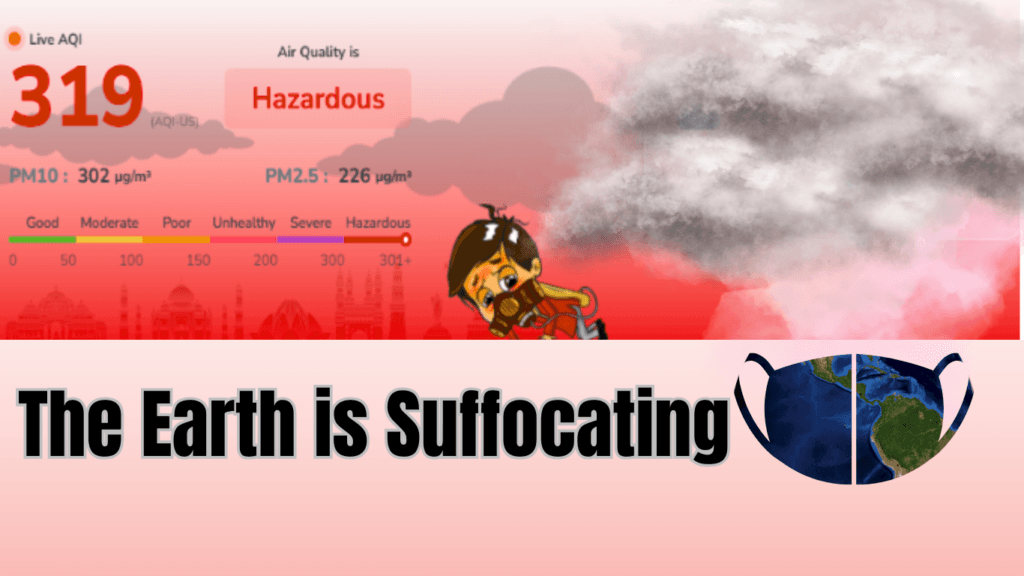
Explaining the Air Quality Index (AQI) and Health Significance
The Air Quality Index (AQI) is not just a number displayed on phones. It reflects the level of concentration of harmful pollutants such as PM2.5, PM10, nitrogen dioxide, sulphur dioxide, carbon monoxide and ground-level ozone. As soon as AQI crosses 300, it enters the “hazardous” level. Hazardous level meaning tht the air is unsafe for all sections of society, including babies, children and senior. As per World Health Organization, long-term exposure to pollution has identified to cause many fatal diseases alongside approximately seven million early deaths annually across the world.
Indian cities regularly exceed safe PM2.5 limits by several times, and while Delhi has drawn international attention. Similar patterns are now emerging in places that were once considered low-risk. Assam’s rising particulate levels signal that air pollution is no longer confined to a few urban hotspots – it is becoming a na wide public health issue.
How Assam Compares with Other Indian States?
North India’s Known Crisis
Northern states like Delhi, Punjab, Haryana and Uttar Pradesh face extreme pollution, especially during winter. Stubble burning, heavy traffic, industrial emissions, dust from construction and weather conditions combine to trap pollutants near the ground. To deal with these regions authority rely on emergency measures such as the Graded Response Action Plan (GRAP), which allows them to ban construction, limit vehicle movement and temporarily shut down highly polluting activities when air quality worsens.
Assam’s Emerging Reality
Assam’s situation is different, but no less concerning. The state does not yet experience Delhi-style winter smog, but the trend is moving in the wrong direction. Guwahati’s rapid expansion, industrial clusters in areas like Byrnihat, increased reliance on private vehicles, open burning of waste and biomass, and large-scale hill cutting for infrastructure have all contributed to declining air quality. Unlike Delhi NCR, Assam does not have a robust, time-bound emergency framework to tackle sudden pollution spikes, which is risky for an ecologically sensitive region.
Economic Consequences: Pollution Is Not Just a Health Issue
Air pollution, usually framed as a health or environmental concern, but its economic impact is just as serious. Studies have shown that polluted air results in a higher healthcare cost, more sick days, and lower productivity, hence lower workforce participation. A Greenpeace study estimates that Delhi alone loses almost 13 percent of its GDP every year due to pollution-related illnesses and early deaths. At the national level, the estimated cost of air pollution costs India more than 1.3 percent of its GDP annual, according to a Lancet study.
For Assam, the stakes are high. The state’s economy relies greatly on tourism, agriculture and tea plantations with a fast growing service sector. Poor air quality is a threat to the worker’s health, increases medical expenses for households, making the states less attractive to investors, and skilled professionals. Although the losses may not immediately show up in the economic data, but over time, they may quietly slow down growth and long-term development.
Preventive Measures Taken By the Assam Government
Recent Government and Institutional Actions in Assam
The Assam Pollution Control Board has introduced the Guwahati Clean Air Action Plan. Which focused on pollution hotspots, traffic emissions, waste burning and industrial sources. While in Byrnihat, the authorities have begun strict dust control measures and emission norms for industries. The state has also started expanding its electric and CNG bus services, improving solid waste management infrastructure, and introducing school level awareness programs. Assam and Meghalaya have initiated discussions to address cross-border industrial pollution, which is especially important for areas like Byrnihat. These are positive steps, and recognition of the issue is an important first move.
Why These Measures Are Still Not Enough?
Despite these initiatives, air quality in Guwahati and nearby areas continues to worsen at certain times of the year, particularly during winter. Pollution monitoring remains limited outside major cities, rules, enforced unevenly and there is no clear action for days when AQI level rises suddenly. At same time, deforestation and unchecked construction continue, while number of vehicles grows faster than public transport capacity. Unlike Delhi NCR, which follows a structured multi-layered during pollution emergencies response, Assam’s approach remains reactive and scattered.
Why Immediate Action Matters?
Air pollution does not become a crisis overnight. It builds slowly, when overlooked for years, until it causes damage to health, livelihoods and the economy and becomes impossible to reverse. If Assam repeats the same mistakes as North India and delays action, it will lead to rising risks of higher disease burden. It will increased healthcare costs, loss of productive working years, harm to both its biodiversity, and long-term economic slowdown.
The warning signs are already visible.
The warning signs are already there. If Assam continues to stay on the same path, same as some of the most polluted northern states and responds too late, the consequences could be severe, with more respiratory and heart illnesses, rising medical bills, lost working years, damaged ecosystems, and pressure on the state’s economy. Air pollution doesn’t strike suddenly; it creeps quietly, until the damage becomes too costly to ignore.
Conclusion: A Call for Urgent, Proactive Governance
Assam’s rising AQI is not an accident, and they have the opportunity to do something prior to when the crisis point is reached. By making air quality monitoring, enforcing emission norms, protecting forests, and integrating environmental health into economic planning must becomes the only hope for these societies.
Clean air is not reserved for big cities or populations with good lifestyle. It is a basic right and a foundation for sustainable development. If Assam delays decisive action, it may soon face the same challenges that other polluted states are struggling to overcome-only at a much higher cost.