


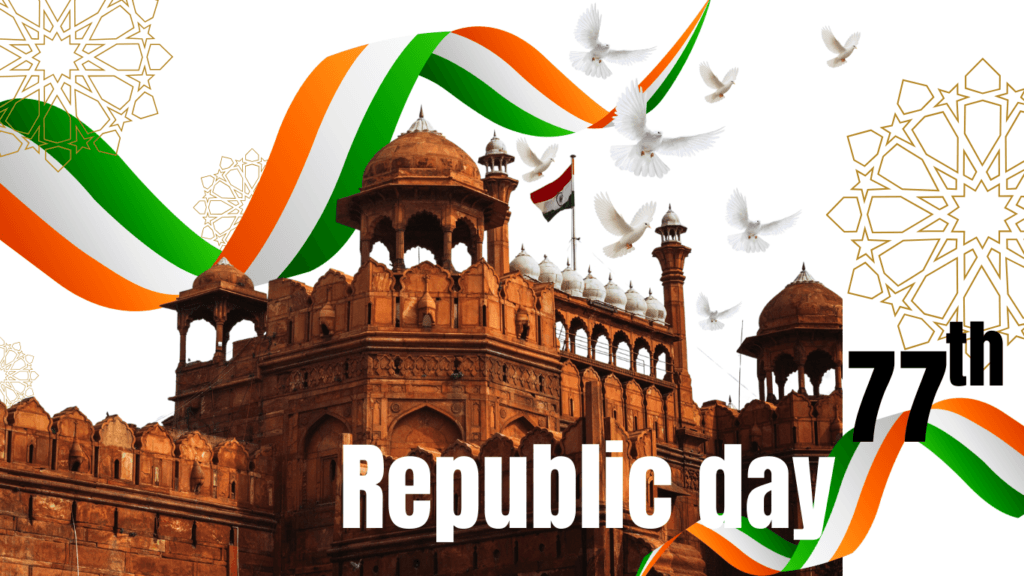
26 January 1950, the day India celebrated it’s first Republic day when the Constitution of India came into force, ending the old colonial laws and establishing the country’s independent and democratic system of governance.
Republic Day’s Importance for Students
The Constitution guarantees us certain rights, such as equality before the law, freedom of speech, and right to education. As citizens of India we must also follow certain duties in relation to the nation such as respecting the nation, maintaining unity and protecting public property. The Republic Day showcase India’s diversity, discipline, and strength, teaching students unity despite differences. Republic Day is not just a national holiday or celebration at school, it helps students understand India’s past and their role as responsible citizens today.
India’s Growth as a Confident Nation
Republic day has a special importance for India’s freedom fighters who spent years in prison, lived in hardship and sacrificed their lives to free India . The Indian Independence in 1947 ended the Colonial Rule but it was Republic Day (1950) which finally fulfilled their dream of the country governed by its own people. It was also on Republic Day that the Indian people began to follow Laws made by the people of India.
The Freedom Fighters, including Subhas Chandra Bose, Mahatma Gandhi, Bhagat Singh and countless others, fought for not only Freedom, but for Justice and Equality for All Indians. On Republic Day, they were able to see their sacrifices for creating this great Nation, as India chose a path to treat everyone equally under the law and democracy, justice, and dignity guide the nation.
The Constitution and the Powers of a Sovereign India
The Constitution not only granted India much power as a Nation but also created a Sovereign and Free Nation. With the Adoption of the Constitution, India became a fully Sovereign Nation allowing India to make its own decisions without any foreign interference. A Democratic System was established wherein the people elect their Government at the National, State & Local Level. The Constitution established Three Different Branches of Government Legislative, Executive & Judicial. Thus establishing a system of Checks and Balances within Government.
The independent judiciary is to serve as the protector of the Constitution and the citizen’s rights. The federal system gives both a central and a state government a functioning government. India has attained complete control of defence, foreign policy and its economy. It now stands confidently at an equal level with other countries. The Directive Principles of State Policy directs the Government to do the needful for the social justice, equality, and public welfare of all citizens.
In simple words, Republic Day reminds us all that with freedom comes responsibility. It is a way to honour and pay respect to those who fought for our freedom; to highlight the importance of the Constitution and its role as a guide for the citizens of the Republic, particularly the youth; and to teach our youth to respect the democratic values we have. Through the understanding of Republic Day the minds of young individuals can be opened to the many facets of the people of India and their strengths as expressed in the principles of the Constitution of India.